23 December 2025
Diamond ERA: Polish Science at the Heart of the European Debate on Open Scholarly Communication

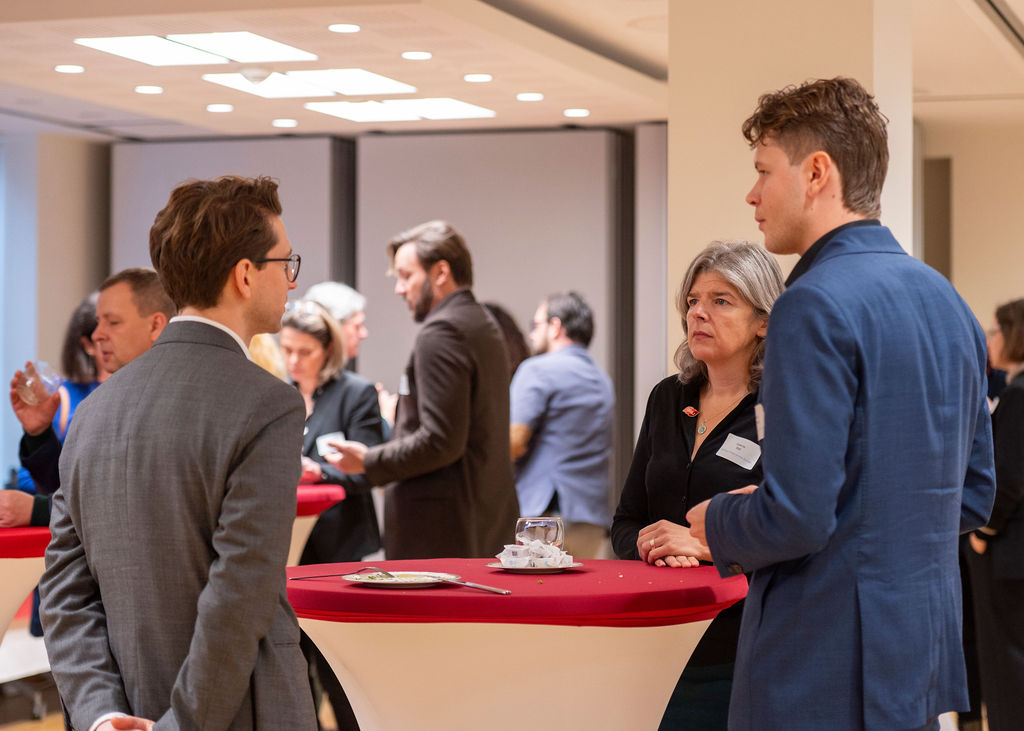
At the beginning of December 2025, Brussels became the venue for an intensive debate on the future of Open Science in Europe. The conference „Diamond ERA: Fostering Openness in the European Research Area”, organised by the PolSCA Office of the Polish Academy of Sciences in Brussels and the Digital Humanities Centre of the Institute of Literary Research of the Polish Academy of Sciences (IBL PAN), in cooperation with the PAS Committee on Literary Studies and the OPERAS research infrastructure, brought together representatives of EU institutions, academia, research funders, libraries, and European research infrastructures.
The timing of the event was not accidental. The conference took place at a crucial moment in the work on the future ERA Act and the next EU Framework Programme, creating a genuine “policy window” to strengthen the position of Diamond Open Access as a lasting component of the European research and innovation system.
Science diplomacy in practice
The event had a strong science diplomacy dimension. On the day preceding the conference, a closed expert meeting with Members of the European Parliament was held, during which recommendations concerning Open Science, data sovereignty, and the role of public research infrastructures were presented. To support this dialogue, the organisers submitted a policy document entitled „Rebuilding Trust in Science through Equitable Publishing” to policymakers.
The conference itself took place at the premises of the Permanent Representation of the Republic of Poland to the European Union, underscoring Poland’s active role in the European debate on the future of scholarly communication. The closing reflections were delivered by Ms Magdalena Kula, Research Attaché at the Permanent Representation of Poland to the EU, who, among other points, confirmed the readiness of the Ministry of Science and Higher Education to initiate negotiations on hosting the OPERAS ERIC infrastructure in Poland—an initiative that would mark a historic step for Polish science.
Why Diamond Open Access?
The substantive discussions demonstrated that Diamond Open Access (as recognised by UNESCO) is not merely an alternative to commercial publishing models, but a coherent response to the structural challenges facing European science. Experts emphasised that models based on high publication fees deepen inequalities between institutions and Member States, shifting financial burdens from readers to authors.
The Diamond OA, as a community-governed model and based on public infrastructures, was presented as a solution that promotes:
- equity in access to publishing,
- multilingualism and bibliodiversity, particularly crucial for the Social Sciences and Humanities,
- data and infrastructure sovereignty, also essential in the context of developing European artificial intelligence,
- and rebuilding trust in science, by strengthening quality control and transparency in publishing processes.
From policy to implementation
The conference clearly followed an “from vision to implementation” approach. Alongside policy debates, participants were introduced to operational Diamond publishing models already functioning in Europe and Poland: university platforms, monograph publishers, scholar-led initiatives, and technological backbones developed, among others, within the OPERAS Innovation Lab.
Special attention was devoted to the European Diamond Capacity Hub (EDCH), a new coordination and professionalisation mechanism for the Diamond OA sector in Europe. Speakers highlighted the importance of quality standards (the Diamond Open Access Standard – DOAS), training programmes, and national competence centres, in which OPERAS-PL, coordinated by IBL PAN, is expected to play a key role.
The final conference summary, together with access to the full agenda and all presentations, is available HERE.
The role of the Polish Academy of Sciences
The Diamond ERA conference confirmed the leading role of PAS structures in connecting scientific expertise with active participation in European decision-making processes. The PolSCA PAS Office provided diplomatic outreach and dialogue with EU institutions, while the Digital Humanities Centre of IBL PAN ensured strong substantive and infrastructural foundations, building on long-standing engagement in OPERAS and Open Scholarly Communication.
These joint efforts demonstrated that the Polish Academy of Sciences is not merely responding to European policies but is actively co-shaping the future directions of Open Science in Europe. The Brussels conference marked an important step in building Poland’s long-term presence at the centre of debates on the future of the European Research Area.
The event was implemented with funding from the Polish Academy of Sciences obtained under the “Open Science” Programme, which supports activities in the dissemination and promotion of science, including the organisation of scientific conferences that increase the international visibility and impact of Polish researchers and institutions.