About the Academy
We are a state scientific institution conducting activities aimed at the development, promotion and dissemination of science.
The Polish Academy of Sciences functions as a corporation of scientists and a network of scientific institutes.
We believe that thanks to science the world can become a better place.

-
350maximum number of national/foreign members
-
68scientific institutes
-
4300 +research workers at institutes
-
6foreign centres
-
8regional branches
-
71scientific committees
-
The corporation's affiliated scholars are eminent scientists, distinguished by their special achievements and authority.
The Academy of Young Scientists, which brings together talented researchers of the younger generation, has also been operating within the structures of the Polish Academy of Sciences since 2010.
-
The second pillar of PAN is a network of dozens of scientific institutes.
This is where the knowledge, inventions and patents that change our reality are created.
-
There are also committees and advisory panels within PAN.
Their role is to disseminate science and provide the highest quality expertise for state authorities and robust public debate.
-
Research stations, libraries, archives, museums, gardens or conference centres are also an important part of PAN.
The academy and institutes have facilities not only in Poland, but also in several European capitals, in the Atacama Desert and even near both poles of the Earth.
Successes and awards
The Polish Academy of Sciences is an institution based on scientific excellence.
The institutes of the Polish Academy of Sciences are distinguished by the highest percentage of A+ and A categories obtained in the evaluation of scientific activity conducted by the Ministry of Science and Higher Education. The Academy is also the Polish leader in the global Nature Index ranking. It takes into account, among other things, the number and value of articles published in renowned scientific journals. PAN is also the highest ranked Polish entity included in the international SCImago ranking, which is created on the basis of scientists' output, number of patent applications and cited works. Researchers and scholars from PAN also regularly receive awards from the Foundation for Polish Science (i.e. the so-called Polish Nobels) - with the Academy accounting for approximately one third of all winners of this award. PAN researchers and scientists can also be found on the TOP 2% list of Stanford University and Elsevier Publishing. This is a compilation of the world's most influential people in science whose publications are most frequently cited by other authors.
17 disciplines
grown at the institutes received in 2021 the highest
40 disciplines
grown at the institutes received in 2022
Our history
Organs of the PAS
-
General Assembly of the PAS
determines the directions of the Academy and supervises all its activities, passing resolutions in this respect that are binding on other bodies of the Academy.
-
Presidium of the Polish Academy of Sciences
1) defines the Academy's development programmes and assesses the degree of their implementation;
2) adopts proposals for the draft state budget in the scope provided for the Academy;
3) adopts the Academy's financial plans and considers reports on their implementation;
4) considers opinions, assessments, expert opinions and forecasts, presented on behalf of the Academy;
5) adopts the programme of the sessions of the General Assembly of the Academy;
6) gives its opinion on draft laws on science and education;
7) adopts resolutions on matters reserved by the law and the Academy's statutes to the competence of the Presidium of the Academy. -
President of the Academy
manages the activities of the Academy and makes declarations of intent on its behalf in matters not reserved for the Chancellor of the Academy. The President of the Academy exercises day-to-day supervision over the Academy's scientific units and other organisational units of the Academy and coordinates the work of the Academy's faculties.
-
Chancellor of the Academy
makes, on behalf of the Academy, declarations of intent with regard to the management of the Academy's property and budget and is responsible for the management of the Academy's property and the financial result of the Academy's activities. The Chancellor of the Academy is responsible for the management of the Academy's property.
Authorities of the Polish Academy of Sciences
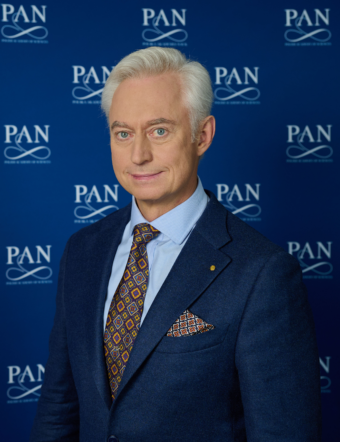
Aleksander Welfe
member of the Council of Provosts of Division I
Specialność
field of social sciences: economics and finance
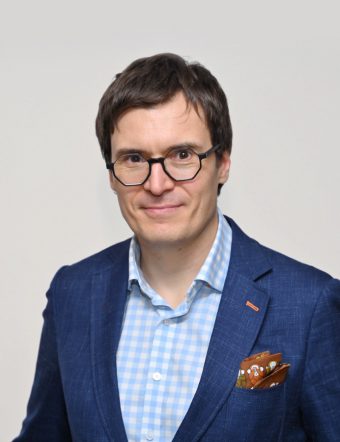
Dariusz Jemielniak
member of the Council of Provosts of Division I
Afiliacja
Akademia Leona Koźmińskiego
Specialność
field of social sciences: management and quality sciences and sociological sciences