22 czerwca 2026
PAN współtworzy europejską debatę o przyszłości programu MSCA
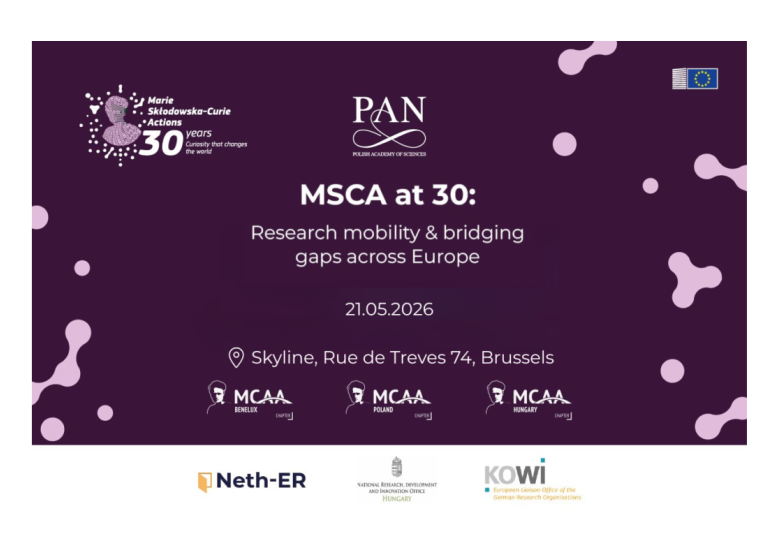
W roku obchodów 75-lecia Polskiej Akademii Nauk, Akademia aktywnie włączyła się również w świętowanie 30-lecia jednego z najważniejszych europejskich programów wspierających rozwój karier naukowych – Marie Skłodowska-Curie Actions (MSCA). Z tej okazji 21 maja 2026 r. w Brukseli odbyło się międzynarodowe wydarzenie MSCA at 30: Research Mobility & Bridging Gaps Across Europe, przygotowane wspólnie przez Biuro PolSCA PAN w Brukseli oraz Biuro Doskonałości Naukowej PAN w Warszawie we współpracy z partnerami europejskimi i społecznością Marie Curie Alumni Association (MCAA), w szczególności MCAA Polish Chapter.
Spotkanie zgromadziło ponad stu uczestników z 20 krajów, w tym naukowców, menedżerów badań, przedstawicieli instytucji naukowych, organizacji wspierających uczestnictwo w programach europejskich oraz reprezentantów Komisji Europejskiej i Rady UE. Jego celem było nie tylko podsumowanie trzech dekad funkcjonowania programu MSCA, ale przede wszystkim rozpoczęcie dyskusji o jego przyszłości w kontekście przygotowań do kolejnego programu ramowego UE po 2028 roku.
W trakcie całodniowych debat uczestnicy podkreślali, że MSCA jest dziś czymś więcej niż programem mobilności naukowej. To instrument wspierający rozwój talentów, budowanie międzynarodowych sieci współpracy, wzmacnianie potencjału instytucjonalnego oraz rozwój Europejskiej Przestrzeni Badawczej. Szczególną uwagę poświęcono zagadnieniom związanym z cyrkulacją talentów, warunkami rozwoju kariery naukowej, współpracą międzysektorową oraz rolą instytucji w przyciąganiu i utrzymywaniu najlepszych badaczy.
W programie znalazły się m.in. debata wysokiego szczebla z udziałem przedstawicieli Komisji Europejskiej, sesja poświęcona cyrkulacji talentów i budowaniu potencjału badawczego, prezentacja sieci NAWA–MSCA Network, a także warsztaty tematyczne i sesje matchmakingowe umożliwiające nawiązywanie nowych partnerstw projektowych. Szczególnym zainteresowaniem cieszyły się dyskusje dotyczące przyszłości europejskich karier badawczych oraz sposobów lepszego powiązania mobilności naukowej z rozwojem instytucji i całych ekosystemów badawczych.
Ważnym elementem wydarzenia było również przedstawienie praktycznych doświadczeń uczestników programu MSCA. Pokazywały one, że wpływ programu wykracza daleko poza finansowanie pojedynczych projektów, przyczyniając się do powstawania nowych zespołów badawczych, profesjonalizacji zarządzania badaniami, umiędzynarodowienia instytucji oraz rozwoju współpracy pomiędzy nauką a otoczeniem społeczno-gospodarczym.
Wnioski zebrane podczas wydarzenia zostaną opracowane w formie rekomendacji dotyczących przyszłości programu MSCA. Dokument przygotowywany obecnie przez organizatorów ma zostać opublikowany latem 2026 r. i stanowić wkład społeczności naukowej w europejską debatę nad kształtem przyszłego programu ramowego FP10 oraz dalszym rozwojem europejskich karier badawczych.
Pełna relacja z wydarzenia dostępna jest na stronie PolSCA PAN.
PAS Contributes to the European Debate on the Future of MSCA
In the year of the 75th anniversary of the Polish Academy of Sciences (PAS), the Academy also played an active role in celebrating the 30th anniversary of the Marie Skłodowska-Curie Actions (MSCA) – one of Europe’s most important programmes supporting research careers and international mobility. To mark this milestone, the international event MSCA at 30: Research Mobility & Bridging Gaps Across Europe took place in Brussels on 21 May 2026. The event was jointly organised by the PolSCA PAS Office in Brussels and the PAS Office for Science Excellence in Warsaw, in cooperation with European partners and the Marie Curie Alumni Association (MCAA), including MCAA Polish Chapter.
The event brought together more than 100 participants from 20 countries, including researchers, research managers, representatives of research-performing and higher education institutions, organisations supporting participation in European programmes, as well as representatives of the European Commission and the Council of the European Union. Its objective was not only to reflect on three decades of MSCA, but above all to launch a discussion on the programme’s future in the context of preparations for the next EU Framework Programme beyond 2028.
Throughout the day, participants emphasised that MSCA has evolved into much more than a research mobility programme. It is now widely recognised as a strategic instrument for developing research talent, building international collaboration networks, strengthening institutional capacity and advancing the European Research Area. Particular attention was devoted to issues related to talent circulation, research career development, intersectoral cooperation and the role of institutions in attracting and retaining outstanding researchers.
The programme featured a high-level policy discussion with representatives of the European Commission, a session on talent circulation and capacity building, a presentation of the NAWA–MSCA Network, as well as thematic workshops and matchmaking activities designed to facilitate new partnerships. Discussions on the future of European research careers and on how research mobility can be more effectively linked to institutional development and stronger research ecosystems attracted particular interest.
An important part of the event was dedicated to practical experiences shared by MSCA participants and institutions. These examples demonstrated that the programme’s impact extends far beyond the funding of individual projects, contributing to the creation of new research teams, the professionalisation of research management, the internationalisation of institutions and stronger links between research and the wider socio-economic environment.
The conclusions emerging from the event are currently being consolidated into a set of recommendations on the future of MSCA. The document, prepared by the organisers and contributors, is expected to be published in summer 2026 and will serve as a contribution from the research community to the ongoing European debate on FP10 and the future of research careers in Europe.
The full event report is available on the PolSCA PAS website.